DIPAC Historic Salmon Releases
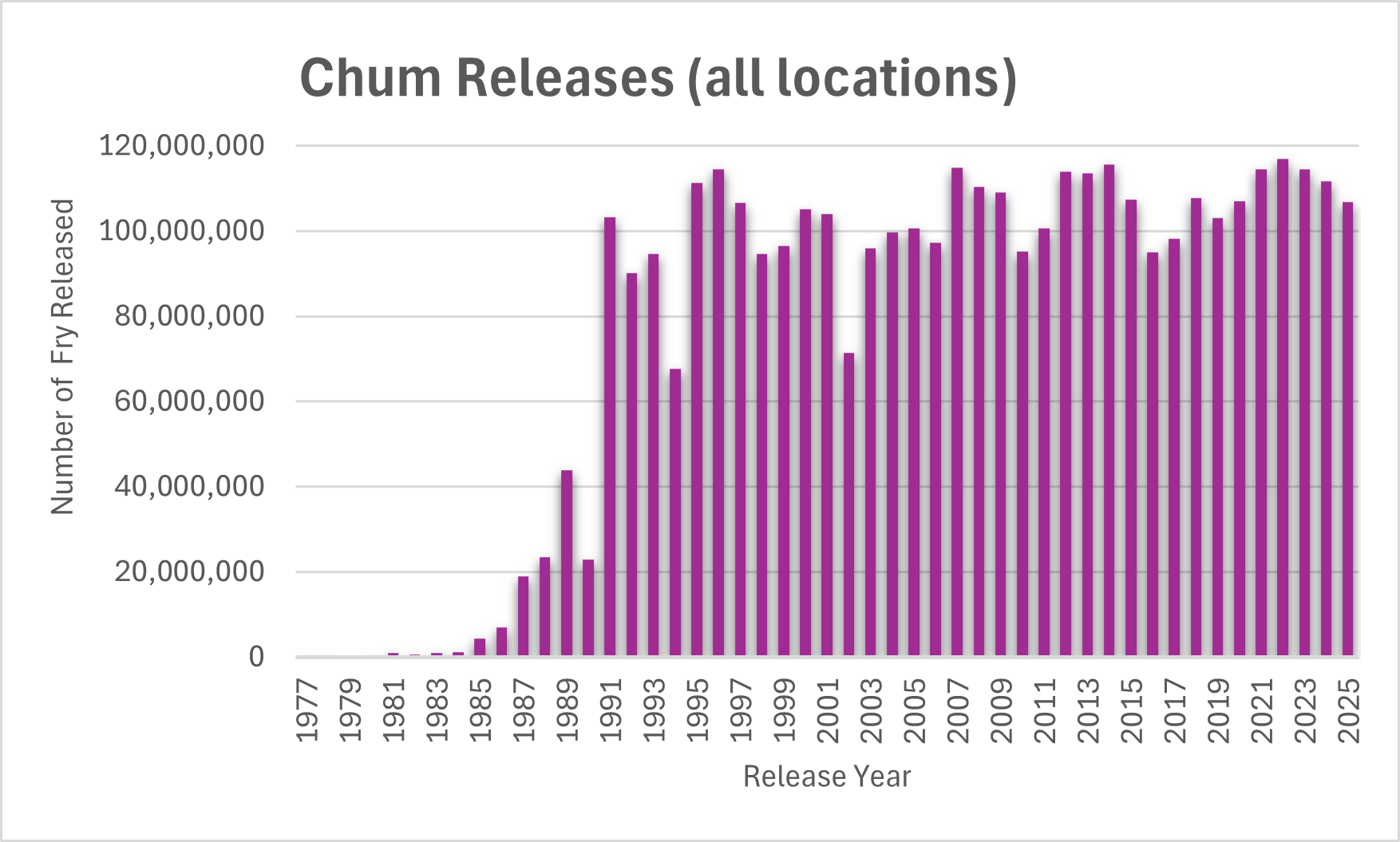
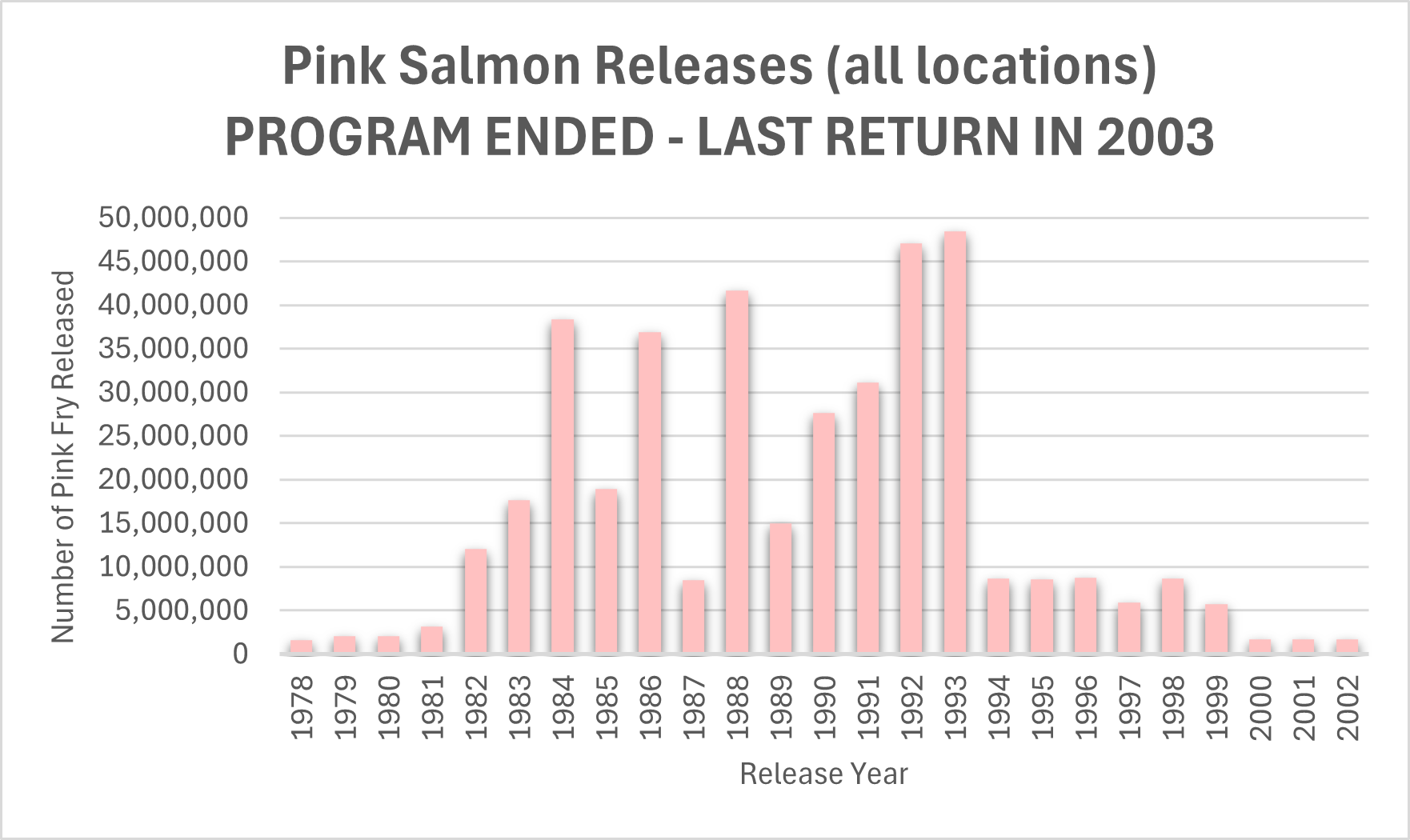
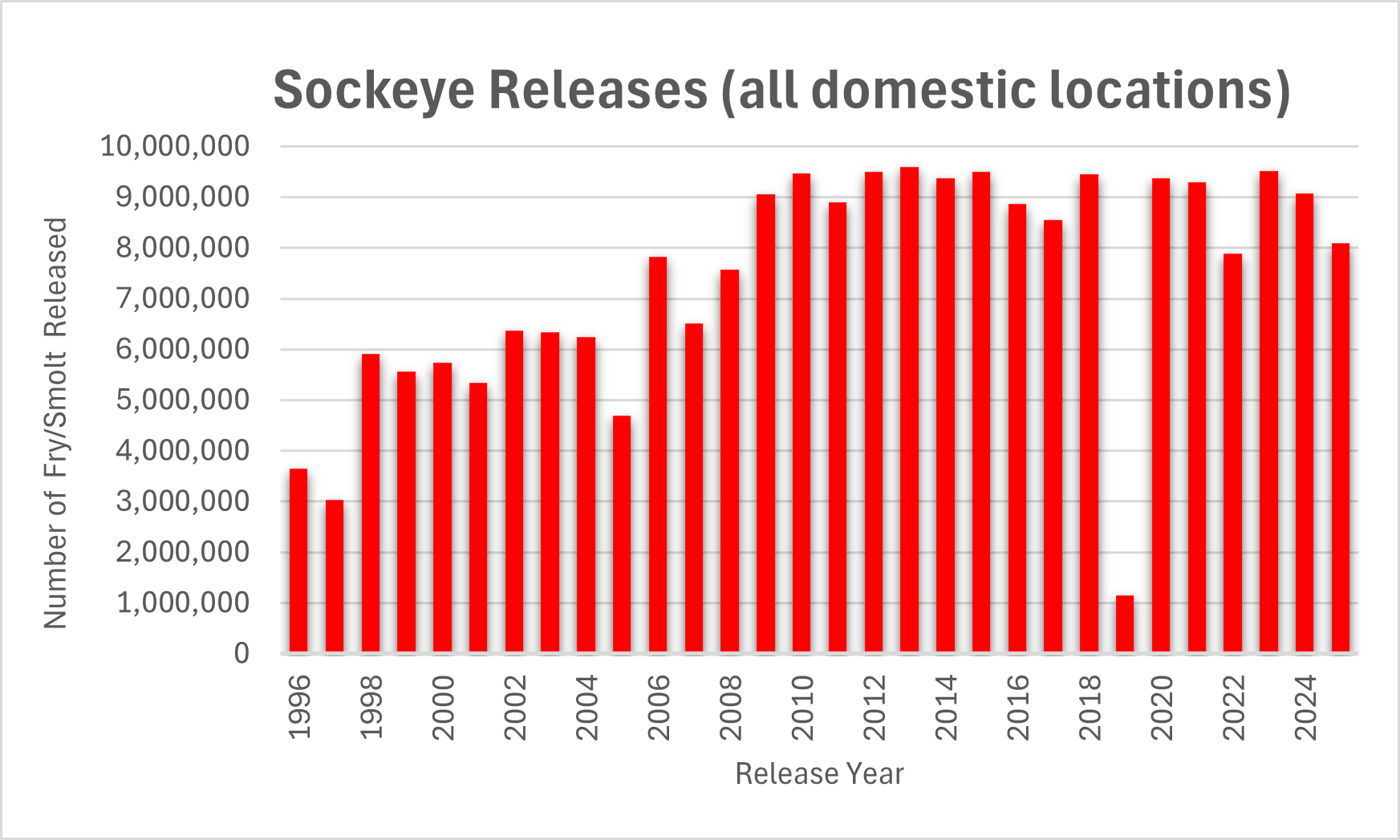
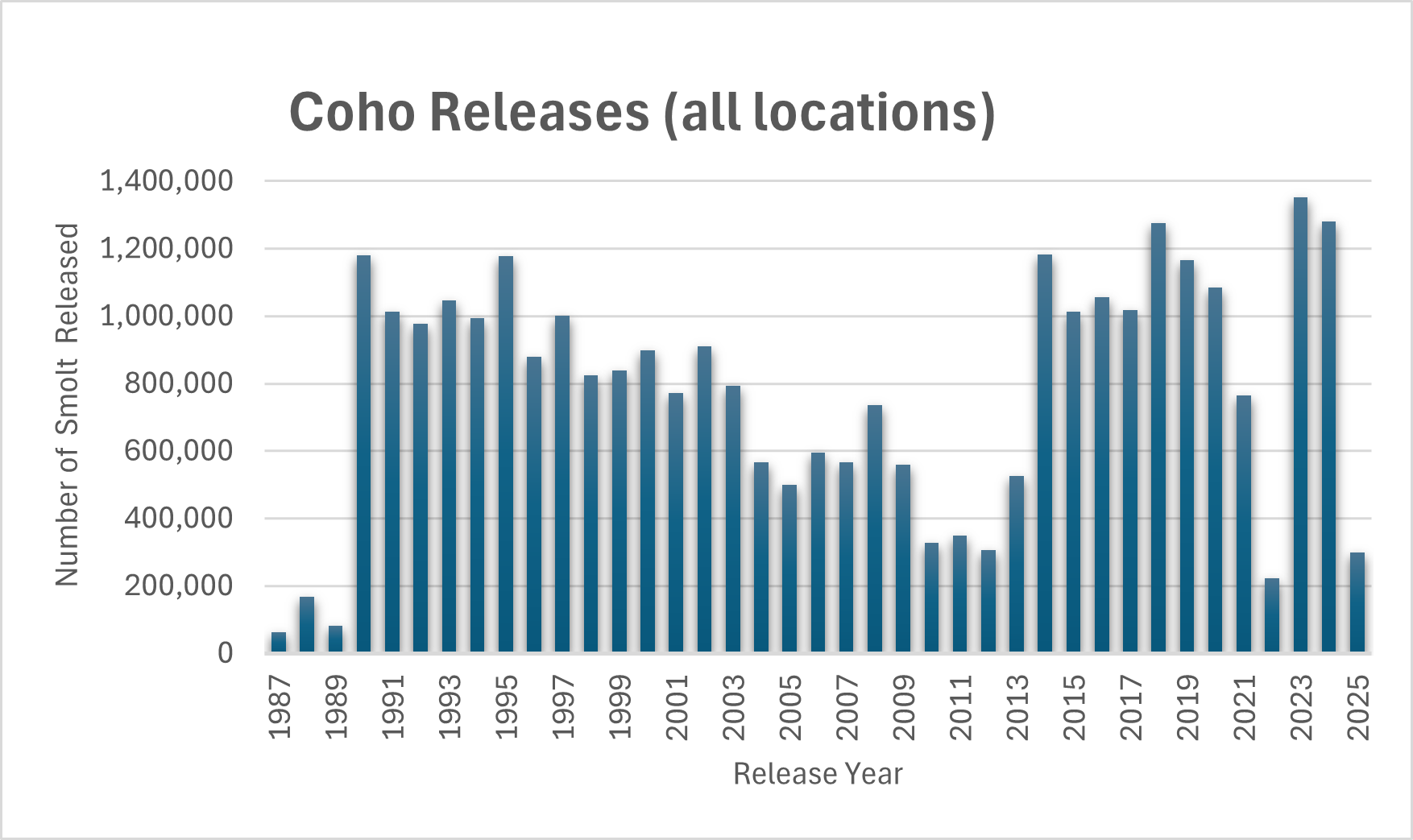
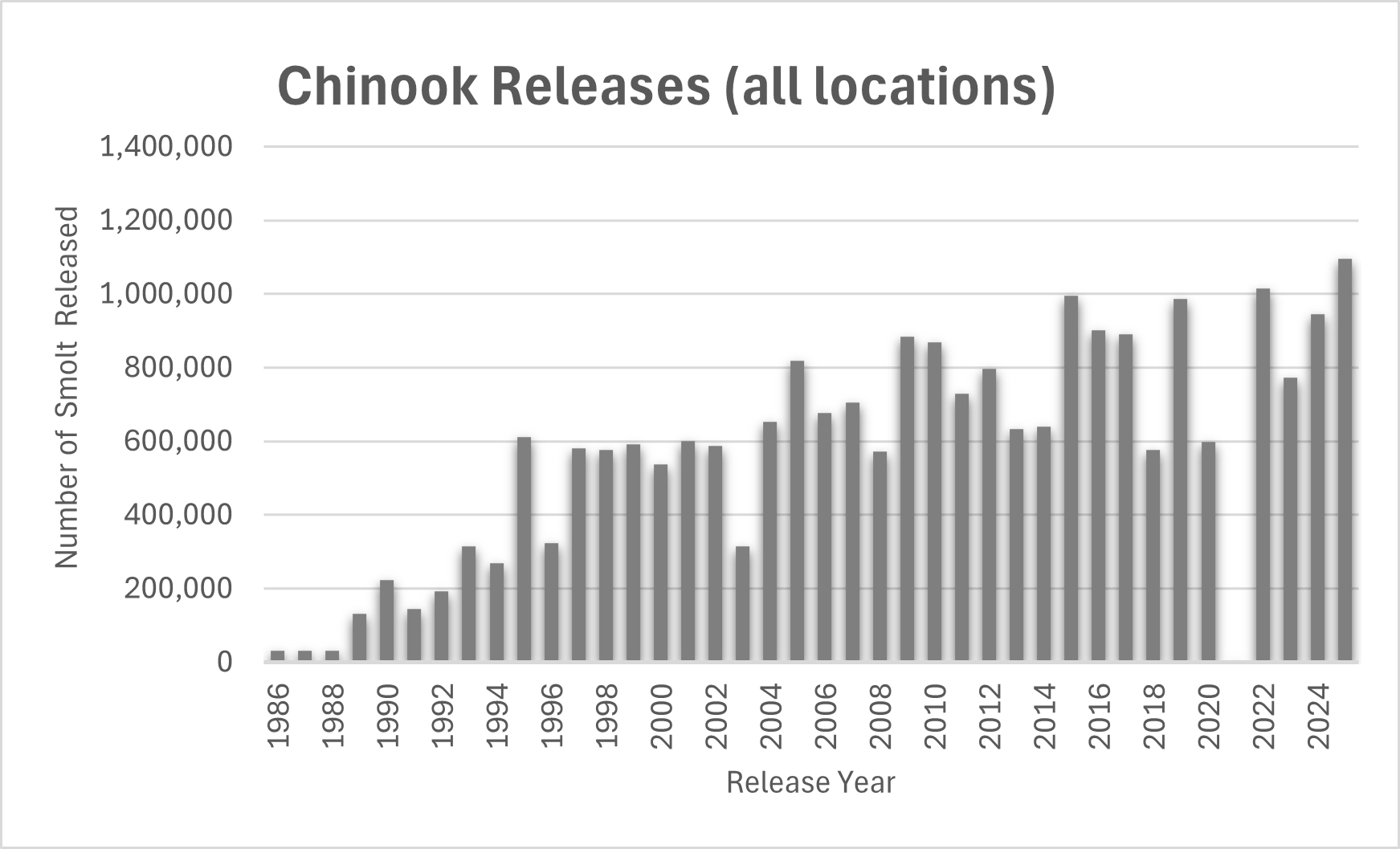
The below graphs detail the releases by species since the DIPAC program began in the late 1970s. Since 1990 DIPAC’s chum release numbers have remained fairly stable at the current 5 different release locations. No new chum release locations have been added to DIPAC’s programs since the permitting of Amalga Harbor release site in 1990. In 1989, DIPAC, with support from NSRAA, began releasing chum at Limestone Inlet when the State owned Snettisham Hatchery began converting from a chum & Chinook program to a sockeye program. DIPAC also worked with NSRAA to begin releasing chum in Boat Harbor in the late 1980s. DIPAC has been operating Limestone Inlet & Boat Harbor without financial or operating support from NSRAA since 2008.
In 1996, DIPAC took over operations of Snettisham Hatchery from the State of Alaska - all of DIPAC’s sockeye production occurs at this facility. No other species is produced at Snettisham Hatchery.
DIPAC discontinued pink production in the early 2000s.
In the mid 2010s, DIPAC reached it’s current capacity for rearing Chinook & coho salmon with the addition of the rearing annex facility at Macaulay Salmon Hatchery (MSH). DIPAC can produce 2 million smolt annually at the MSH facility. If we come up short of one species at egg take, we can raise slightly more of the other species with the rearing space we have available.
DIPAC is currently permitted for the following capacity (fertilized egg collection):
MSH: 135 million chum, 1.5 million coho, 1.25 million Chinook
Snettisham: Complicated due to Pacific Salmon Treaty contractual program with the State of Alaska - Rearing capacity of 9.5 million sockeye fry/smolt to be released domestically.
Both hatchery locations have maximized domestic production. There is no plan to increase production of any species.
Click Here for DIPAC’s current release site map.
Cick Here for the public annual management plans explaining detailed plans and historic releases/returns by program.
DIPAC Historic Salmon Returns
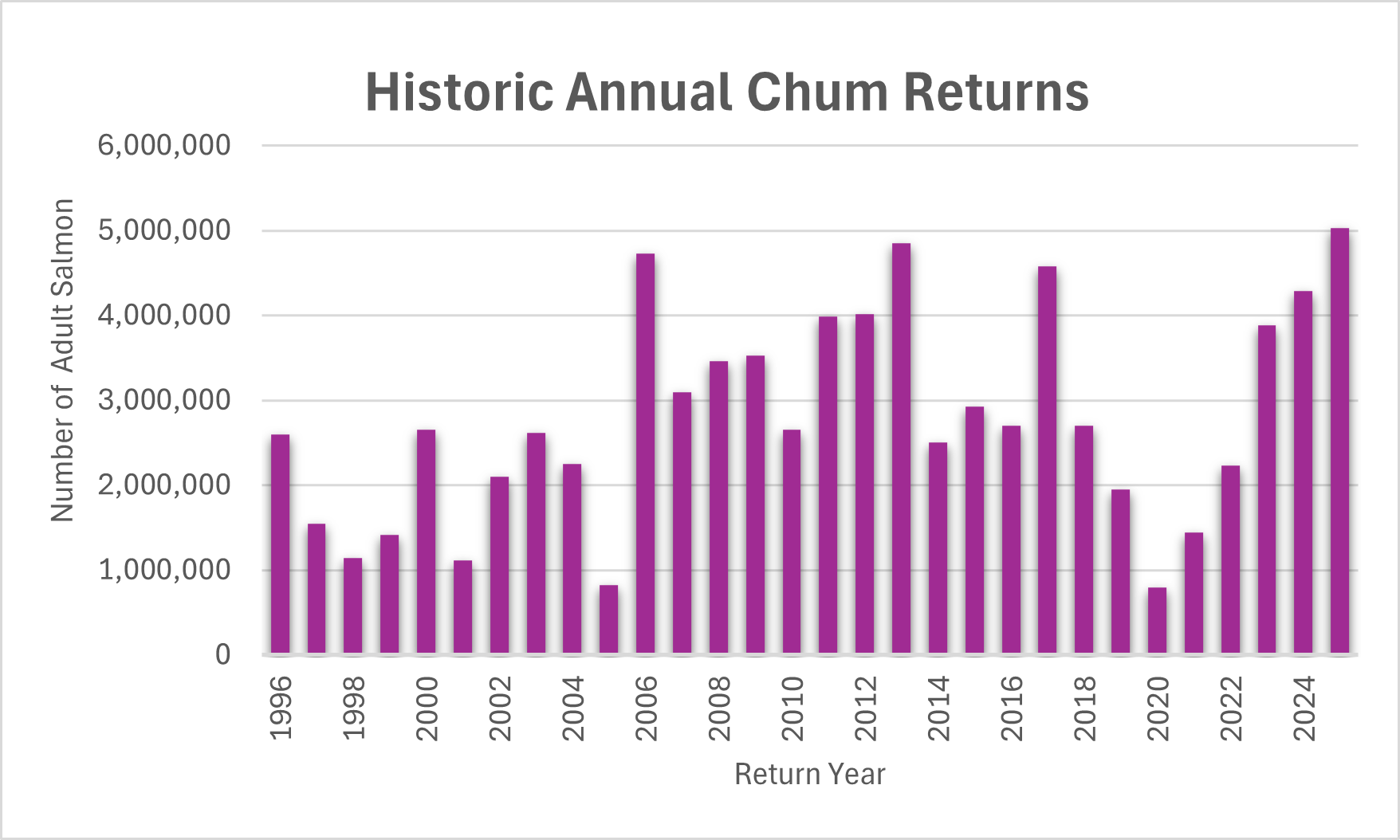
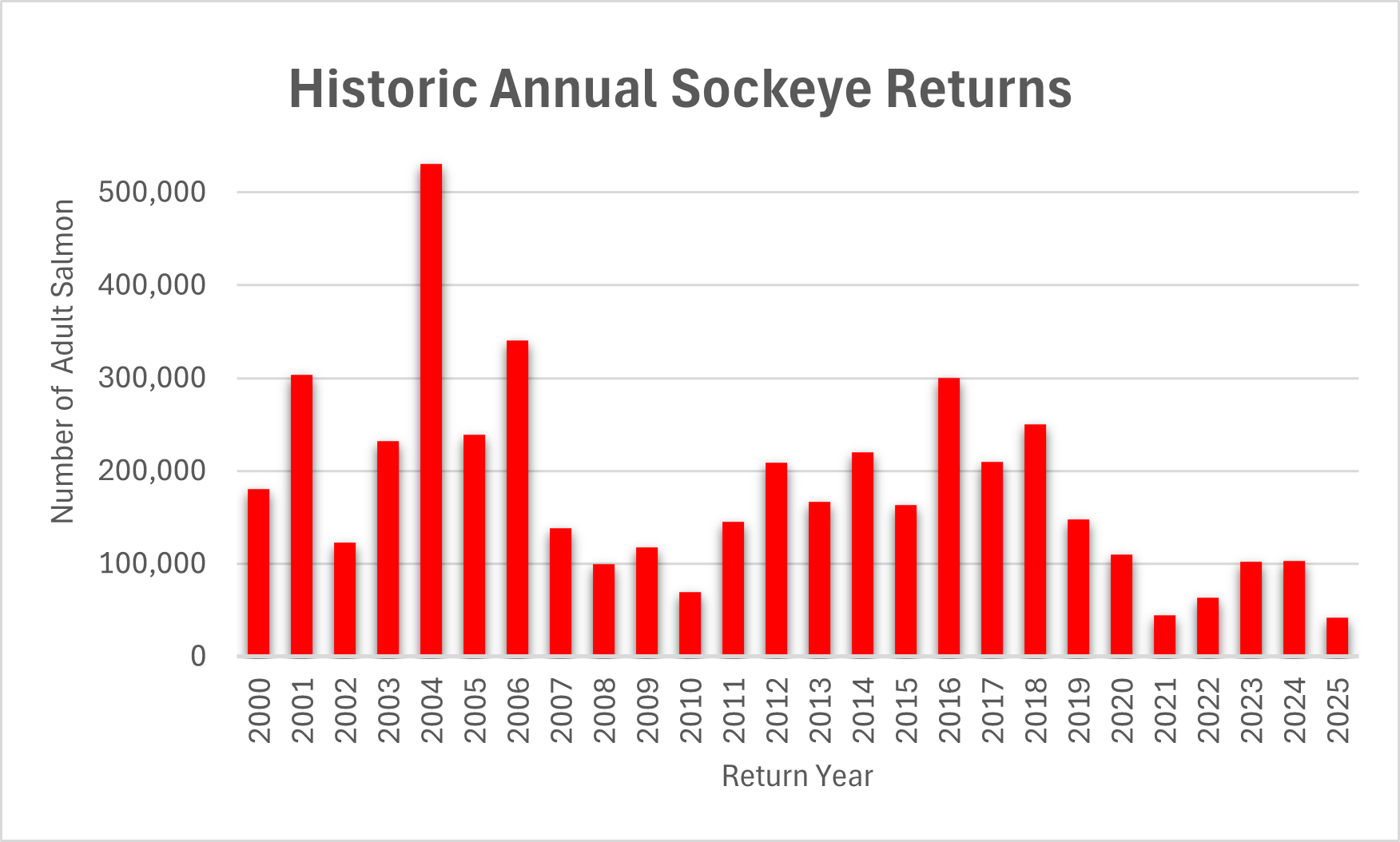
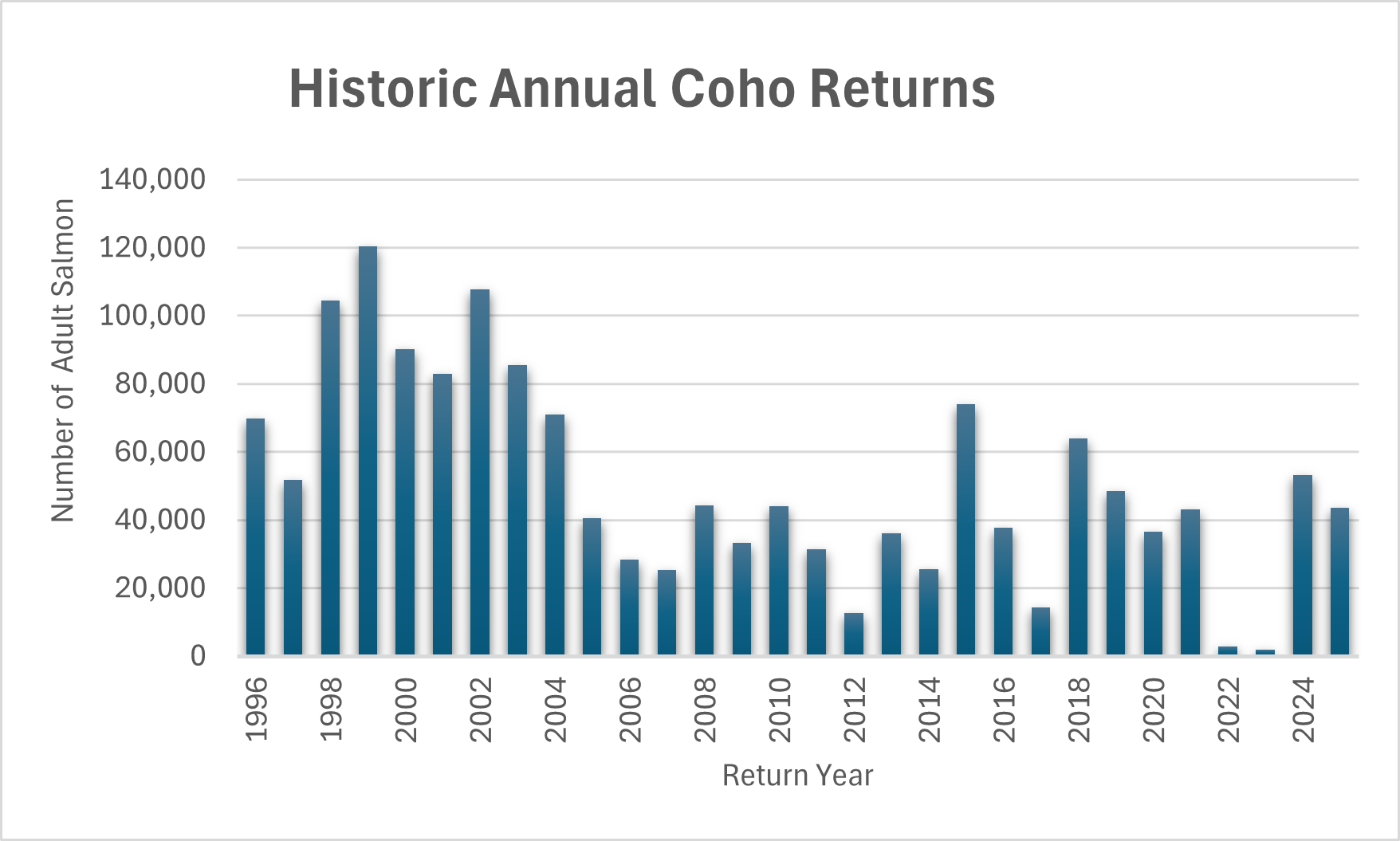
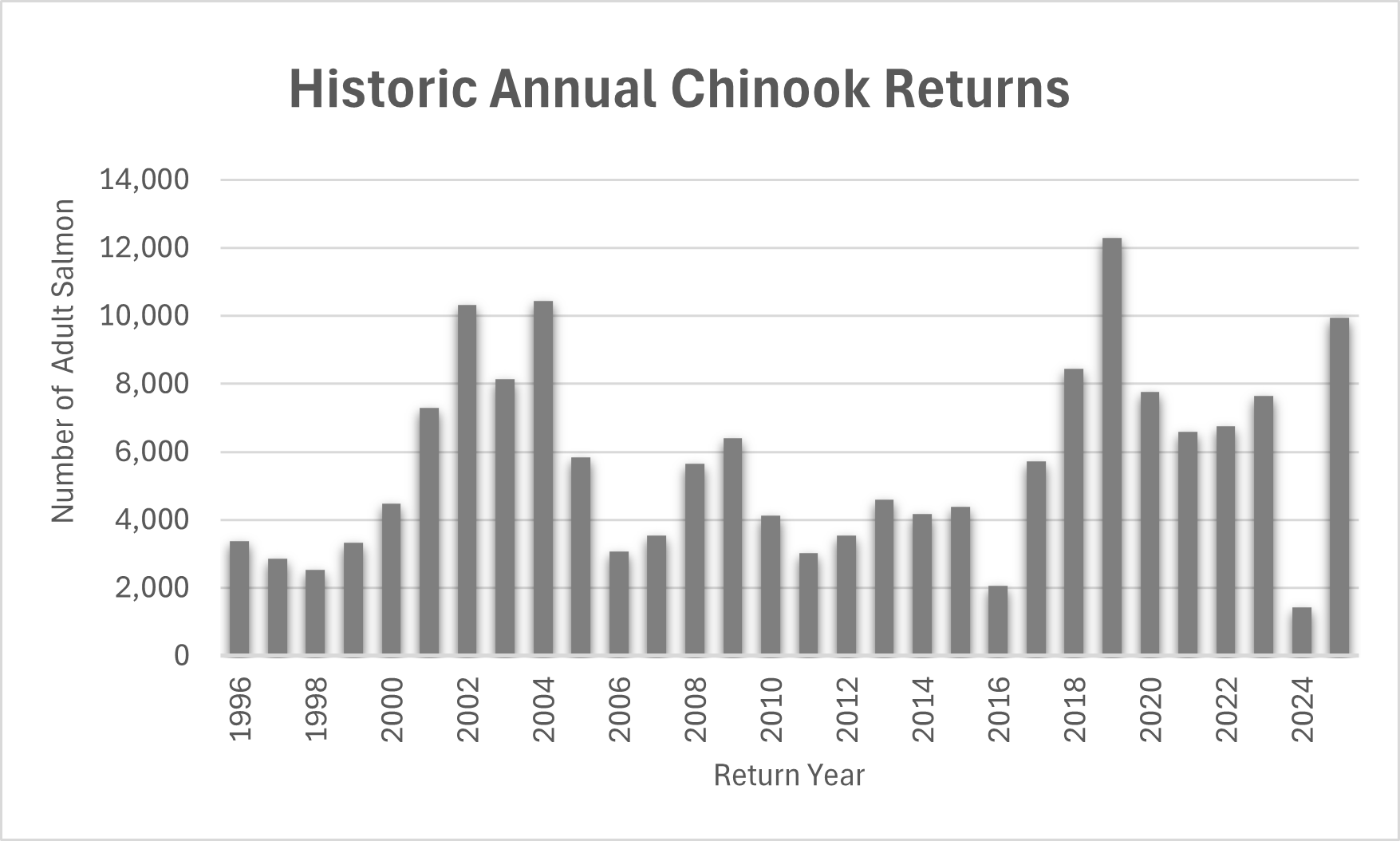
Adult returning salmon have been enumerated since the beginning of the program in the early 1980s. Data collection became more robust the mid to late 1990s with the creation of a research & evaluation lab and dedicated staff for sampling at the MSH. Return information for prior to the mid 1990s, and for pink salmon, is available in DIPAC’s two annual management plans on the ADF&G Website. The below graphs include total returning adults including fish caught by commercial & sport fishermen, cost recovery harvest & broodstock.
Of note, DIPAC changed coho broodstock in 2008. First returns off this new stock began in 2011. Although number of returning adults have been smaller overall, the average size of fish is much larger from the new brood source.